
You are here:
- Home
- Countries & Parks
- Zanzibar Archipelago

Zanzibar
Overview
Wildlife
Birds
Best Time To Visit
Weather & Climate
Getting There
Malaria & Safety
Overview
Wildlife
Birds
Best Time
Climate
Getting There
Malaria & Safety

By Fadhili Mlema
Fadhili is a seasoned East African safari expert with 15 years of experience crafting luxurious and authentic journeys. Deeply rooted in the region, his passion for wildlife and tourism has shaped his unparalleled expertise. Let Fadhili curate your ultimate African adventure.
By Fadhili Mlema
Fadhili is a seasoned East African safari expert with 15 years of experience .
- Live Location
- View Photos
- Open Map
Best Time To Go
June to October
High Season
June to October & December
Size
2,654 km² (1,025 sq mi)
Altitude
Sea Level – 119 m (390 ft)
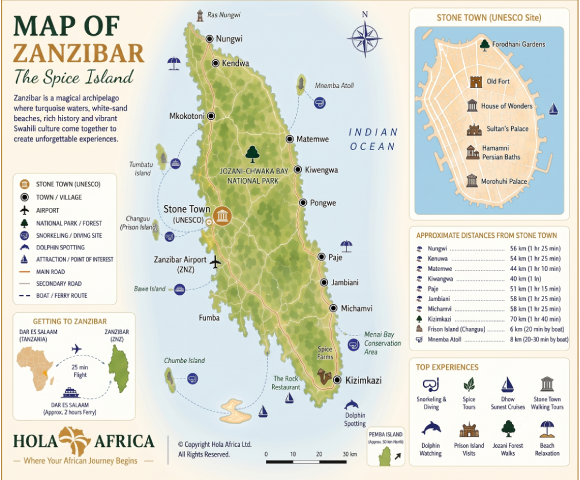
The Zanzibar Archipelago is home to an extraordinary blend of terrestrial and marine wildlife, from the protected forests of Jozani-Chwaka Bay National Park to the vibrant coral reefs surrounding Mnemba Island, Chumbe Island and the Menai Bay Conservation Area. Encounter the endangered Zanzibar red colobus, Sykes’ monkeys and diverse birdlife within Jozani Forest, while the Indian Ocean offers unforgettable encounters with dolphins, sea turtles, tropical reef fish and thriving coral ecosystems. Together, Zanzibar’s forests, mangroves and marine reserves create one of East Africa’s most rewarding island wildlife destinations.
From powder-white beaches and swaying coconut palms to turquoise lagoons, historic Stone Town and lush spice plantations, the Zanzibar Archipelago showcases some of East Africa’s most spectacular coastal scenery. Hidden sandbanks, dramatic sunsets, emerald forests and crystal-clear waters create an idyllic island landscape that is equally suited to relaxation, photography and unforgettable tropical adventures.
Zanzibar offers one of East Africa’s most diverse collections of travel experiences, combining pristine beaches, vibrant marine life, rich Swahili culture, and centuries of history. Visitors can snorkel and dive in crystal-clear waters, explore coral reefs around Mnemba Atoll and Menai Bay, sail aboard a traditional dhow at sunset, discover the UNESCO-listed Stone Town, or visit aromatic spice farms that gave Zanzibar its famous nickname, The Spice Island. Nature lovers can encounter the endemic Zanzibar Red Colobus Monkey in Jozani Forest, while food enthusiasts can enjoy authentic Swahili cuisine, cooking classes, and cultural village experiences. From relaxing beach escapes to unforgettable ocean adventures, Zanzibar offers experiences for every style of traveller throughout the year.
The Zanzibar Archipelago enjoys a warm tropical climate year-round, with average temperatures ranging from 25°C to 32°C (77°F–90°F). Coastal breezes help moderate the heat, while two rainy seasons and a long dry season create excellent conditions for beach holidays, snorkelling, diving and cultural exploration. Although Zanzibar can be visited year-round, weather patterns influence underwater visibility, sea conditions, and outdoor activities.
The best time to visit the Zanzibar Archipelago is during the long dry season from June to October, when sunny days, low humidity, and calm seas create ideal conditions for beach relaxation, snorkelling, diving, and island excursions. January and February also offer excellent weather with warm temperatures and outstanding underwater visibility, making Zanzibar a rewarding destination in almost every season.
By Fadhili Mlema
Fadhili is a seasoned East African safari expert with 15 years of experience crafting luxurious and authentic journeys. Deeply rooted in the region, his passion for wildlife and tourism has shaped his unparalleled expertise. Let Fadhili curate your ultimate African adventure.
By Fadhili Mlema
Fadhili is a seasoned East African safari expert with 15 years of experience .
Zanzibar Island (Unguja) is home to a remarkable diversity of wildlife, with ancient coastal forests, mangrove wetlands, and coral reefs protecting some of East Africa’s most distinctive species. The island’s greatest wildlife highlight is the endemic Zanzibar Red Colobus Monkey, found only in Jozani-Chwaka Bay National Park, alongside the elusive Ader’s Duiker, Sykes’ Monkey, bush babies, butterflies and over 200 bird species. Offshore, vibrant coral reefs support dolphins, sea turtles and abundant tropical marine life, making Zanzibar one of Tanzania’s most rewarding nature and wildlife destinations.
- Abundant
- Common
- Occasional
- Rare
- None

- Abundant

- Common

- Rare

- Occasional

- Occasional
- Common

- Occasional

- Occasional

- Common
- Occasional

- Rare

- Common
Zanzibar’s wildlife is defined by its unique mix of endemic forest species and spectacular marine life. Encounter the Zanzibar Red Colobus Monkey and the rare Ader’s Duiker in Jozani-Chwaka Bay National Park, spot dolphins around Kizimkazi, and explore vibrant coral reefs inhabited by sea turtles, reef fish and countless marine species. From ancient forests to the turquoise waters of the Indian Ocean, Zanzibar offers unforgettable wildlife experiences both on land and beneath the sea.
Wildlife viewing in Zanzibar is rewarding year-round, with each season offering unique experiences. The dry seasons (June to October and December to February) provide pleasant weather and excellent conditions for exploring Jozani-Chwaka Bay National Park, where the Zanzibar Red Colobus Monkey and Ader’s Duiker are easily spotted. Calm seas during these months also create ideal conditions for dolphin watching, snorkelling, and encounters with marine wildlife, while the wetter months bring lush landscapes and increased bird activity across the island.
- View Photos
By Fadhili Mlema
Fadhili is a seasoned East African safari expert with 15 years of experience crafting luxurious and authentic journeys. Deeply rooted in the region, his passion for wildlife and tourism has shaped his unparalleled expertise. Let Fadhili curate your ultimate African adventure.
By Fadhili Mlema
Fadhili is a seasoned East African safari expert with 15 years of experience .
Notable Birds in Zanzibar


Zanzibar offers rewarding birdwatching throughout the year, with resident forest and coastal species found across Jozani-Chwaka Bay National Park, mangrove wetlands, and the island’s shoreline. Signature birds such as the Fischer’s Turaco, Zanzibar Boubou, African Paradise Flycatcher, and colourful sunbirds can be seen year-round. The June to October dry season provides cooler temperatures, clear weather and excellent forest access, while November to March welcomes thousands of migratory shorebirds from Europe and Asia, making it one of the best times for bird photography and coastal birdwatching.
Bird Species
320+
Migratory Birds
Nov to Apr

By Fadhili Mlema
Fadhili is a seasoned East African safari expert with 15 years of experience crafting luxurious and authentic journeys. Deeply rooted in the region, his passion for wildlife and tourism has shaped his unparalleled expertise. Let Fadhili curate your ultimate African adventure.
By Fadhili Mlema
Fadhili is a seasoned East African safari expert with 15 years of experience .
Jan
Feb
Mar
Apr
May
Jun
Jul
Aug
Sep
Oct
Nov
Dec
- Excellent
- Good
- Fair
- Poor
Zanzibar is a year-round tropical destination, but the best time to visit is from June to October, when dry weather, lower humidity and crystal-clear waters create perfect conditions for beach holidays, snorkelling, diving and island tours. A second excellent season from December to February offers hot, sunny days ideal for relaxation, watersports and exploring Stone Town.
Best Time
June to October (Ideal for beaches, diving, snorkelling & sightseeing)
High Season
June to October & December to February (Peak travel season with sunny weather and calm seas)
Low Season
March to May (Green season with tropical rains, lush landscapes and fewer visitors)
Best Weather
June to October (Cooler temperatures, low humidity, clear skies and excellent ocean visibility)
Worst Weather
April to May (Heaviest rainfall, higher humidity and rougher sea conditions)
- View Photos
By Fadhili Mlema
Fadhili is a seasoned East African safari expert with 15 years of experience crafting luxurious and authentic journeys. Deeply rooted in the region, his passion for wildlife and tourism has shaped his unparalleled expertise. Let Fadhili curate your ultimate African adventure.
The Zanzibar Archipelago enjoys a warm tropical climate year-round, influenced by the surrounding waters of the Indian Ocean. Temperatures remain fairly consistent, with warm days and pleasant sea breezes along the coast. Zanzibar experiences two main rainy seasons: the short rains from November to December and the long rains from March to May, with a relatively drier period typically occurring in January and February. Rainfall often comes in short showers rather than continuous storms, allowing many activities to continue during the day.
The dry season offers the most comfortable weather for beach holidays and outdoor activities.
- June, July & August: Daytime temperatures average around 27°C (81°F) with cooler evenings. Humidity is lower, and the weather is generally clear.
- September & October: Conditions become slightly warmer with temperatures reaching about 30°C (86°F), while the sea remains calm and ideal for snorkelling and diving.
During the wet season, the islands become lush and green as seasonal rains nourish the tropical vegetation.
- November & December: The short rains bring brief showers followed by sunny periods.
- January & February: A short drier interval often occurs with warm temperatures and good beach conditions.
- March and April mark the peak of the rainy season: The long rains bring heavier rainfall and higher humidity. Although some days may be overcast, the scenery becomes particularly vibrant.
- Live Location
- View Photos
By Fadhili Mlema
Fadhili is a seasoned East African safari expert with 15 years of experience crafting luxurious and authentic journeys. Deeply rooted in the region, his passion for wildlife and tourism has shaped his unparalleled expertise. Let Fadhili curate your ultimate African adventure.
Reaching Zanzibar is straightforward, with excellent air and sea connections from mainland Tanzania and international destinations. Most visitors arrive through Abeid Amani Karume International Airport (ZNZ), located just 10–15 minutes from Stone Town. Direct international flights operate from several cities in Africa, the Middle East, and Europe, while frequent domestic flights connect Zanzibar with Dar es Salaam (25 minutes), Arusha, Kilimanjaro, Mwanza, and other Tanzanian destinations.
Travellers can also reach Zanzibar by high-speed ferry from Dar es Salaam, with crossings typically taking 1 hour 30 minutes to 2 hours, depending on the operator and sea conditions.
Once on the island, private transfers, taxis, rental cars, and hotel shuttles make it easy to reach popular destinations including Nungwi, Kendwa, Matemwe, Kiwengwa, Paje, Jambiani, Michamvi, Kizimkazi, and Stone Town. Road conditions are generally good, and most resorts are within 20 minutes to 1.5 hours of the airport.
Whether you’re planning a luxury beach escape, honeymoon, diving holiday, or cultural adventure, Zanzibar is one of the easiest island destinations in East Africa to access.
- Main Park Location
Find the best flight deals to Zanzibar (ZNZ) by comparing fares from hundreds of airlines in one place. Whether you’re flying directly or connecting through Dar es Salaam (DAR), booking platforms like Skyscanner make it easy to compare schedules, prices, and the best available tickets for your Zanzibar holiday.
Zanzibar is served by frequent daily domestic flights from major cities across Tanzania, making it one of the country’s most accessible island destinations. Regular services operate from Dar es Salaam, Arusha, Kilimanjaro, Mwanza, Dodoma, and other regional airports, with most flights arriving at Abeid Amani Karume International Airport (ZNZ).
Leading domestic airlines include Precision Air, Air Tanzania, Auric Air, Flightlink, Coastal Aviation, Regional Air, and Safari Airlink, offering convenient connections for beach holidays, safaris, and multi-destination itineraries.
Please refer to our FAQ—Tanzania pages for detailed information regarding passport, visa, vaccination, and other entry requirements.
By Fadhili Mlema
Fadhili is a seasoned East African safari expert with 15 years of experience crafting luxurious and authentic journeys. Deeply rooted in the region, his passion for wildlife and tourism has shaped his unparalleled expertise. Let Fadhili curate your ultimate African adventure.
Zanzibar is one of East Africa’s safest and most established island destinations, welcoming visitors with warm Swahili hospitality, excellent tourism infrastructure, and a relaxed coastal atmosphere. Whether exploring Stone Town, relaxing on white-sand beaches, or enjoying ocean activities, most visits are safe and trouble-free when using licensed operators and following normal travel precautions.
As with many tropical destinations, malaria exists in Zanzibar, although the risk is generally lower than in many parts of mainland Tanzania. Travellers should consult their healthcare provider before departure, stay up to date with routine vaccinations, use mosquito protection, and follow current travel health advice for a safe and comfortable holiday.
Wildlife experiences in Zanzibar are generally safe when enjoyed with licensed guides and responsible tour operators. Whether visiting Jozani Forest, watching red colobus monkeys, exploring mangrove forests, or joining marine excursions, visitors should respect wildlife, follow guide instructions, and help protect the island’s unique natural environment.
Discover Zanzibar Tours
to
pp (USD)
Tanzania:
Private tour,
Semi-Luxury,
- 8 days
- 0
to
pp (USD)
Tanzania:
Private tour,
Luxury,
- 8 days
- 0
to
pp (USD)
Tanzania:
Private tour,
Luxury +,
- 8 days
- 0
